How to teach kids about dental hygiene
Toothbrushing is one of those tiny daily tasks that can turn into a nightly negotiation. One evening your child brushes happily; the next, they clamp their mouth shut and run away. That is completely normal. The good news is that children cooperate much more when they understand why we brush, and when brushing feels like a familiar routine rather than a fight.
Here is how we approach dental hygiene with little ones: simple explanations, a predictable routine, a bit of play, and a friendly introduction to the dentist.
Start with what teeth actually do
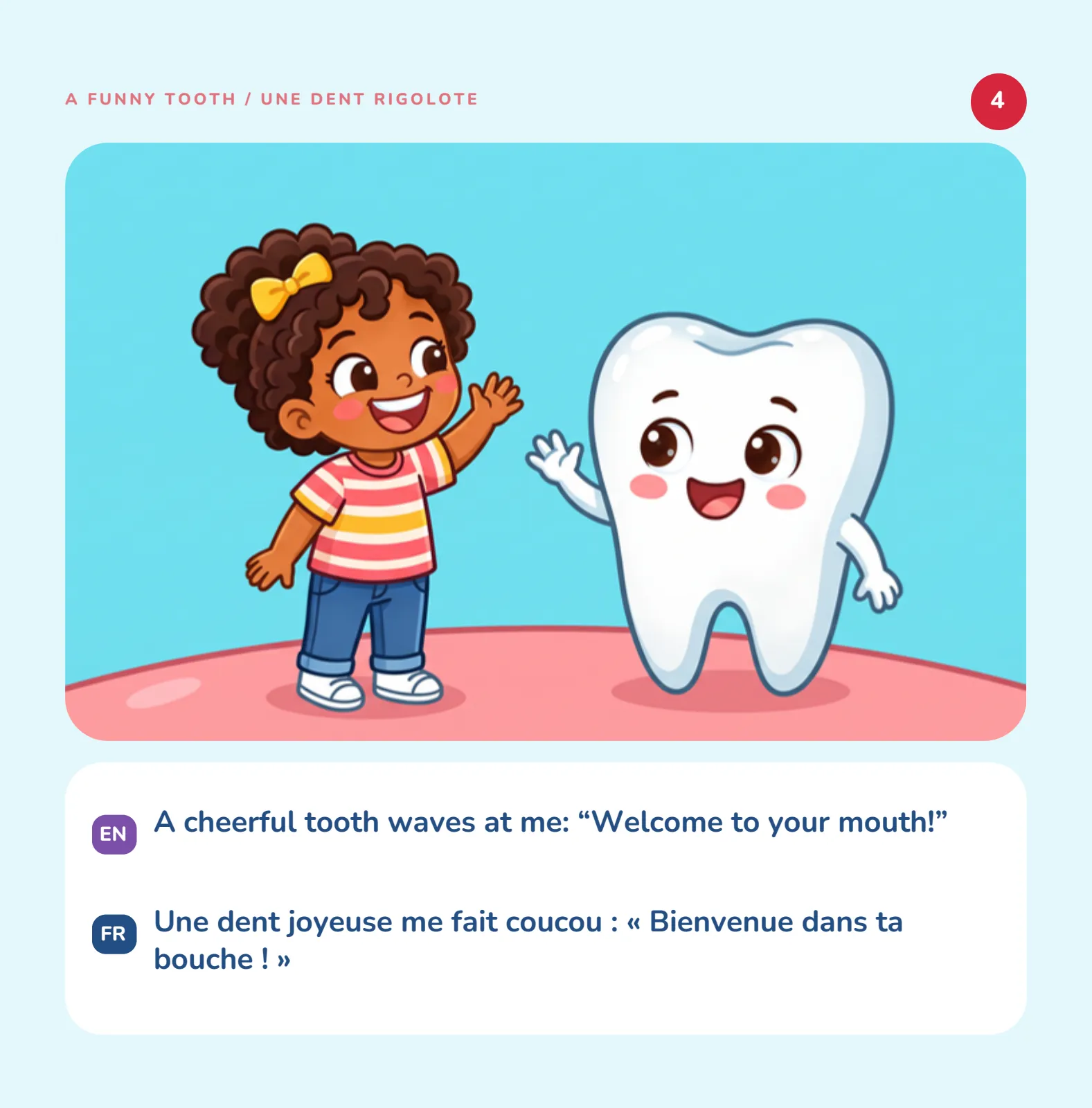
Young children are curious about their bodies, and teeth are easy to explore because they can see and feel them. Before talking about brushing, talk about what teeth are for.
- Biting: the flat, sharp teeth at the front cut food into pieces, like little scissors.
- Chewing: the big bumpy teeth at the back grind food until it is soft enough to swallow.
- Talking: teeth help us make sounds like "th", "s" and "f". Try saying "sssnake" with your lips covering your teeth and see what happens.
- Smiling: teeth are part of the face we show the people we love.
Let your child look in a mirror, count a few teeth, and feel the difference between the front and back ones with a clean finger. Our post on how to talk to children about their body has more ideas for turning these little observations into real learning.
Explain brushing in simple words
Children do not need a chemistry lesson. They need one clear, true idea they can hold on to. Something like:
"After we eat, tiny bits of food stay on our teeth. If they stay there too long, they can make our teeth sick and sore. Brushing sweeps them away and keeps our teeth strong."
You can add that the toothbrush is like a little broom, and that we brush every side of every tooth: the outside, the inside and the chewing tops. Keep the tone calm and positive. Children who are frightened about their teeth do not usually brush better; they just worry more.
Baby teeth matter too
Some children (and grown-ups) think that baby teeth do not matter because they will fall out. You can explain that baby teeth hold the space for the big teeth growing underneath, and that they help us chew and talk for many years. Looking after them now is looking after the big teeth later.
Build a calm, predictable routine
Routines take the argument out of daily tasks. When brushing always happens at the same point in the morning and evening, it becomes "just what we do".
- Same time, same place. For example, after breakfast and just before the bedtime story.
- Twice a day. Brushing in the morning and before bed is the usual recommendation; your dentist can tell you what suits your child.
- Grown-up help. Young children do not yet have the hand control to clean every tooth well. Let them have a go first, then take a turn yourself to finish the job. Ask your dentist when your child is ready to brush alone.
- The right amount of toothpaste. The recommended amount and type of toothpaste depends on your child’s age, so please check with your dentist or pharmacist.
- A clear finish. A song, a timer or a sticker on a chart tells your child that brushing is done.
A visual routine can be a big help here, especially at bedtime when everyone is tired. Our Morning & Bedtime Routine Busy Book lets children move picture cards to follow their own routine, so steps like brushing can become their job rather than an instruction. For more ideas, read our guide to creating a morning routine for kids.
Make it playful
Play does not replace good brushing, but it can make children much more willing to open their mouths.
Brushing games to try
- Find the sugar bugs: pretend you are hunting tiny "food crumbs" hiding behind each tooth, and sweep them all away.
- The tooth tour: narrate your way around the mouth like a bus driver: "Next stop, the back teeth on the top!"
- Teddy goes first: let your child "brush" a soft toy’s teeth, then swap roles.
- The song: pick a short song that lasts about as long as brushing should take, and sing it every time.
- Mirror time: let your child watch in a mirror while you brush, so they can see what is happening.
Talk about food without fear
Rather than labelling foods "good" or "bad", you can explain that some foods stick to our teeth for longer, like sweets or sticky snacks, and that water is a great drink for teeth. If you have questions about your child’s diet and their teeth, your dentist or doctor is the best person to ask.
Help your child feel at ease with the dentist
A visit to the dentist can feel strange for a young child: a big chair that moves, a bright light, a person in a mask looking into your mouth. Knowing what to expect makes a big difference.
- Talk about the visit a few days before, in a calm and matter-of-fact way.
- Explain the main steps: sitting in the chair, opening wide, the dentist counting and looking at teeth with a little mirror.
- Play "dentist" at home with a toy, a torch and a small mirror.
- Avoid words that might worry your child, and do not use the dentist as a threat ("if you don’t brush, the dentist will…").
- Afterwards, praise your child for being brave and curious, whatever happened.
How often your child should see a dentist is something your dental team will advise. Many families find regular, uneventful check-ups help children see the dentist as a friendly part of life rather than something to dread. Our article on preparing your child for a doctor’s appointment has more tips that work just as well for dental visits.
Read about teeth together
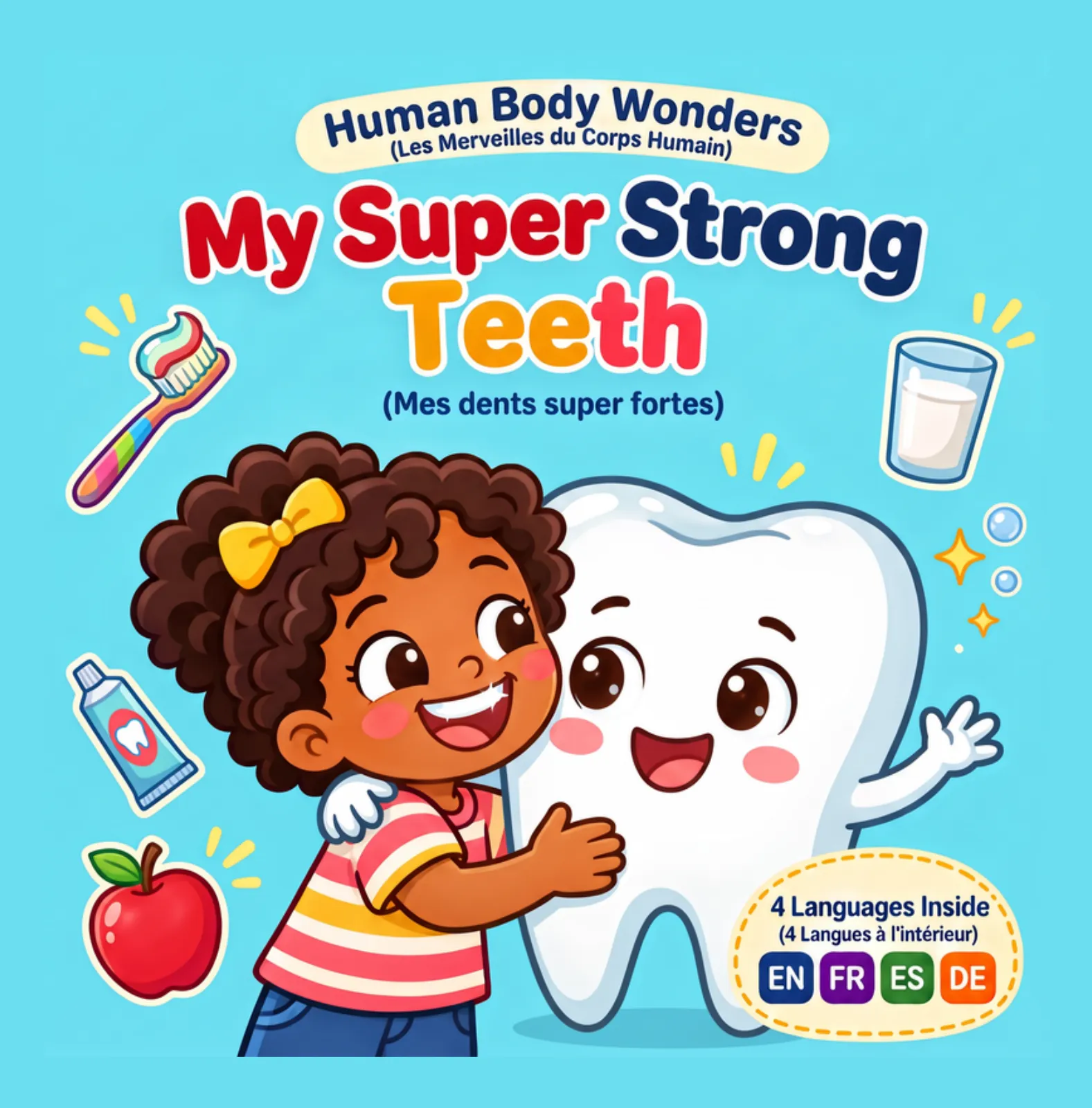
Stories are a gentle way to explore topics that can feel a bit scary. We created My Super Strong Teeth in our Human Body Wonders series to help children discover how their teeth bite, chew and help them smile, and how to keep them strong. Like every book in the series, it is a 58-page square picture book written by a midwife for ages 3 to 7, with story pages and colouring pages, and every page in English, French, Spanish and German.
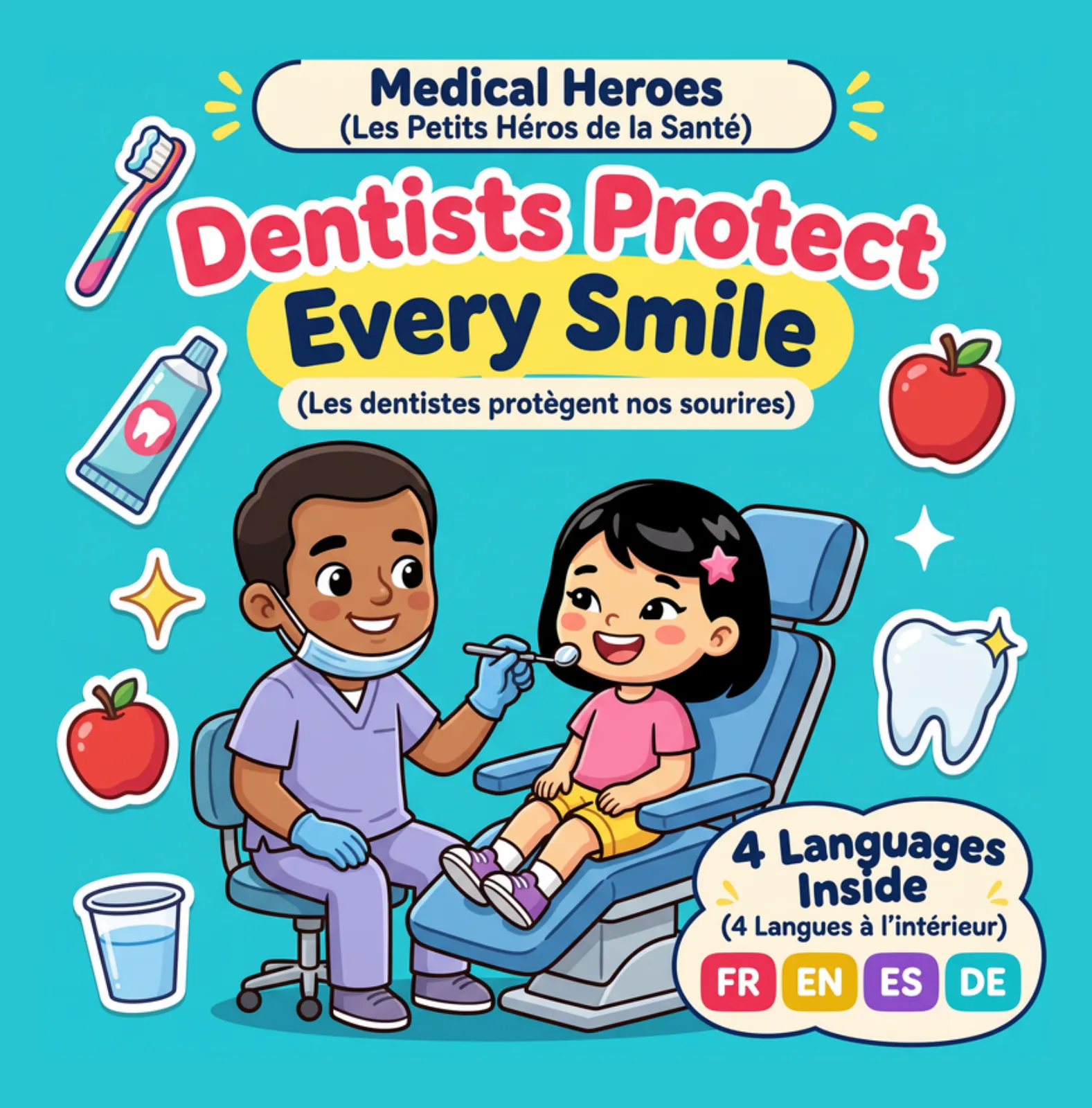
If your child is nervous about check-ups, Dentists Protect Every Smile from our Medical Heroes series shows how dentists check, clean and protect teeth, in a calm, friendly way. Reading it a few days before an appointment gives your child words and pictures for what will happen. You can find both titles, and the rest of our collections, on our books page.
Small steps, every day
Dental hygiene is not learned in one evening. It is built from hundreds of small, ordinary moments: a song at the sink, a giggle in the mirror, a story about teeth before bed. Be patient with yourself and your child. Some days will go smoothly and some will not, and that is fine. What matters is coming back to the routine, gently, again and again.