Teaching children about the human skeleton
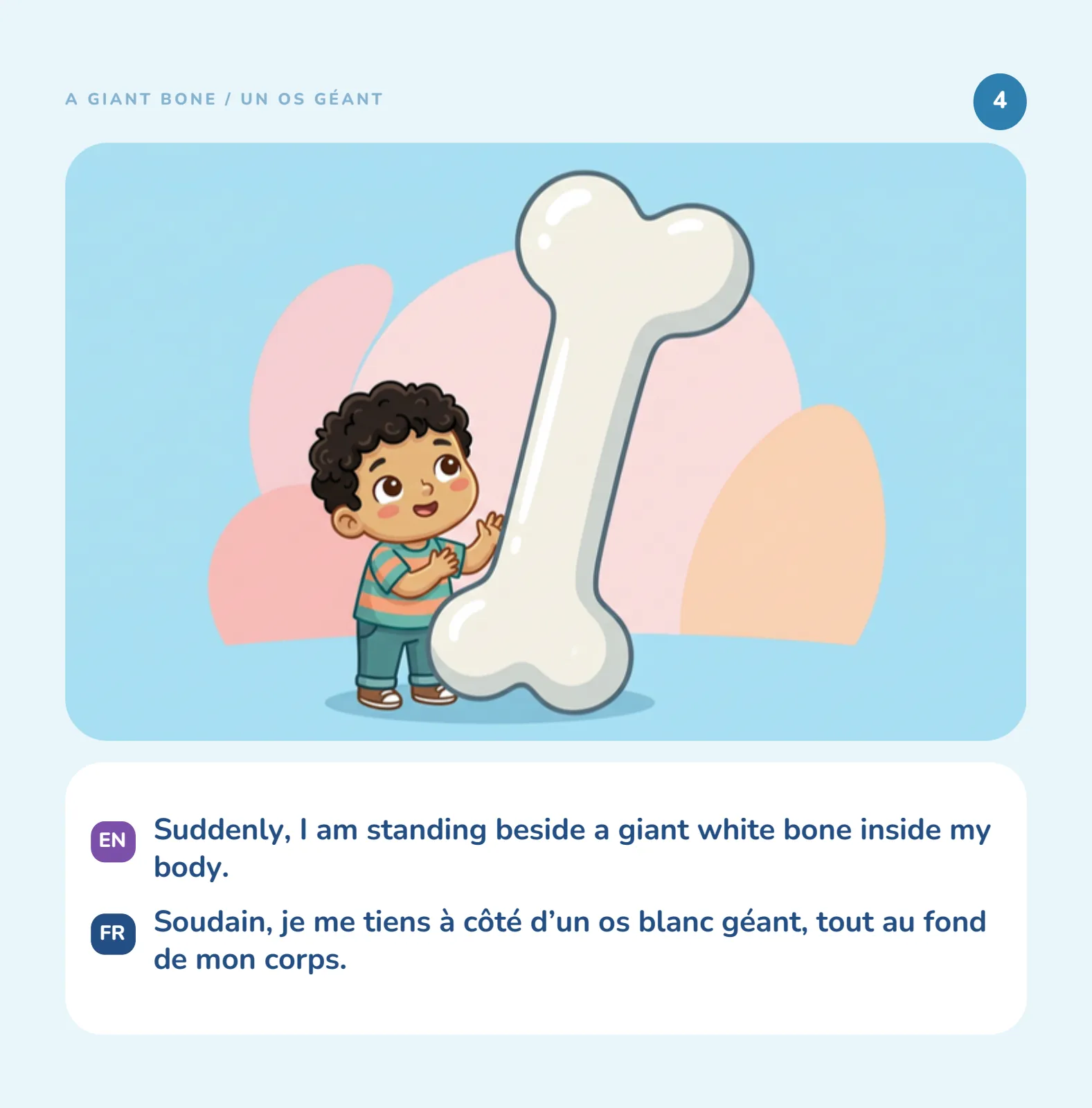
Children meet skeletons everywhere: in Halloween decorations, at the museum, in dinosaur books. But the most interesting skeleton is the one they carry around every day. When a child realises that there are bones inside their own arm, holding it up and helping it move, something clicks. Their body stops being a mystery and becomes something they can explore.
Here is how we like to introduce the skeleton to young children, with simple, true facts and a lot of hands-on fun.
Start with a feeling, not a fact
Before you name a single bone, help your child find their bones.
- Press gently on the back of your hand and feel the long, thin bones under the skin.
- Tap the top of your head: that hard part is your skull.
- Run your fingers down the middle of your back and feel the bumps of your backbone.
- Breathe in and feel your ribs move under your fingers.
- Bend your knee and feel the round bone at the front, the kneecap.
Children are often amazed that something so hard is hiding under their soft skin. This is the perfect starting point, because it comes from their own body. We share more ideas like this in our post on talking to young children about their body.
What do bones do?
A young child does not need a long list. Three big jobs are enough, and each one can be shown.
1. Bones hold us up
"Without bones, you would be floppy like a jellyfish!" Children love this image. The skeleton is the frame that gives our body its shape and lets us stand, sit and walk. You can compare it to the poles inside a tent: take them away, and the tent collapses.
2. Bones protect the soft parts inside
Some bones are like helmets and shields.
- The skull protects the brain, like a strong helmet.
- The ribs make a cage that protects the heart and lungs.
- The backbone protects the spinal cord, the bundle of nerves that carries messages between the brain and the body.
This is a nice moment to explain why we wear a helmet on a bike: it is extra protection on top of the skull.
3. Bones help us move
Bones cannot move on their own. Muscles are attached to them and pull on them, and that is how we wave, jump and dance. Bones and muscles are a team. Ask your child to bend their arm and feel the muscle at the front of the upper arm getting harder while the bones stay still. If your child enjoys this, our book about muscles makes a lovely companion to the bones book.
Fun facts that are actually true
Children adore surprising facts. Here are a few that are accurate and easy to understand.
- Grown-ups have 206 bones. That is a lot of bones to fit inside one body!
- Babies are born with more bony parts than grown-ups. As children grow, some of them slowly join together to make bigger, stronger bones. Your child’s skeleton is still changing right now.
- The smallest bone is in the ear. It is tiny, smaller than a grain of rice, and it helps us hear.
- The longest bone is the thigh bone, called the femur. Ask your child to find it: it goes from the hip to the knee.
- Bones are alive. They are not dry and dead like a Halloween skeleton. Living bones grow as children grow, and they can even mend themselves.
- Hands are full of bones. Each hand has lots of small bones, which is why fingers can do such fine, careful movements.
Joints: where bones meet
Joints are the places where two bones meet and the body can bend. Young children find them fascinating, because they can test them.
The bend test
Ask your child to try picking up a pencil without bending their fingers, or to walk without bending their knees. It is very hard, and very funny. Then let them bend again and feel the difference. Joints are what make our skeleton flexible.
Different kinds of movement
- Knees and elbows bend one way, a bit like a door opening and closing.
- Shoulders and hips can move in a circle. Try making big arm circles!
- The neck lets the head nod and turn.
Ask your child to find as many joints as they can: fingers, wrists, elbows, shoulders, hips, knees, ankles and toes.
Hands-on activities
Little scientists learn best with their hands. Here are some simple ideas to try at home.
Build a paper skeleton
Draw or cut simple shapes for the main bones (skull, ribs, backbone, arms, legs) and assemble them on a sheet of paper. Paper fasteners at the elbows and knees make a skeleton that can bend.
X-ray art
Use white chalk or a white crayon on dark paper and draw the bones inside a hand. You can trace around your child’s hand first, then add the bones inside. Lovely to hang on the fridge.
The jelly test
Put a soft toy that has no stiff parts next to a toy that has a firm frame, and compare. Which one can stand up on its own? Talk about how bones give the body its shape.
Bone and muscle teamwork
Make a simple moving model: two craft sticks joined with a paper fastener as the "bones", and a strip of paper or an elastic band as the "muscle". Pull the strip and the arm bends. It shows, in a very simple way, how muscles pull on bones.
If your child loves activities like these, our printable Discovery Lab includes a Bones & Muscles mission with a bend test, a moving paper hand and a skeleton puzzle. You can find it on our discovery kits page; its pages are in English and it is made for ages 5 to 7. For more ideas, see our post with human body activities for preschoolers.
Keeping bones strong
Children often ask how to make their bones bigger and stronger. You can keep the answer simple and positive:
- Moving and playing: running, jumping, climbing and dancing help bones grow strong.
- Eating a variety of foods: bones need good food to grow.
- Sleep: the body does a lot of its growing and repairing while we sleep.
And if a bone breaks? You can explain that a broken bone needs a doctor, who will help it stay in the right position, sometimes with a cast, while the bone mends itself. This can be very reassuring for a child who has a friend with a cast at school.
Read about bones together
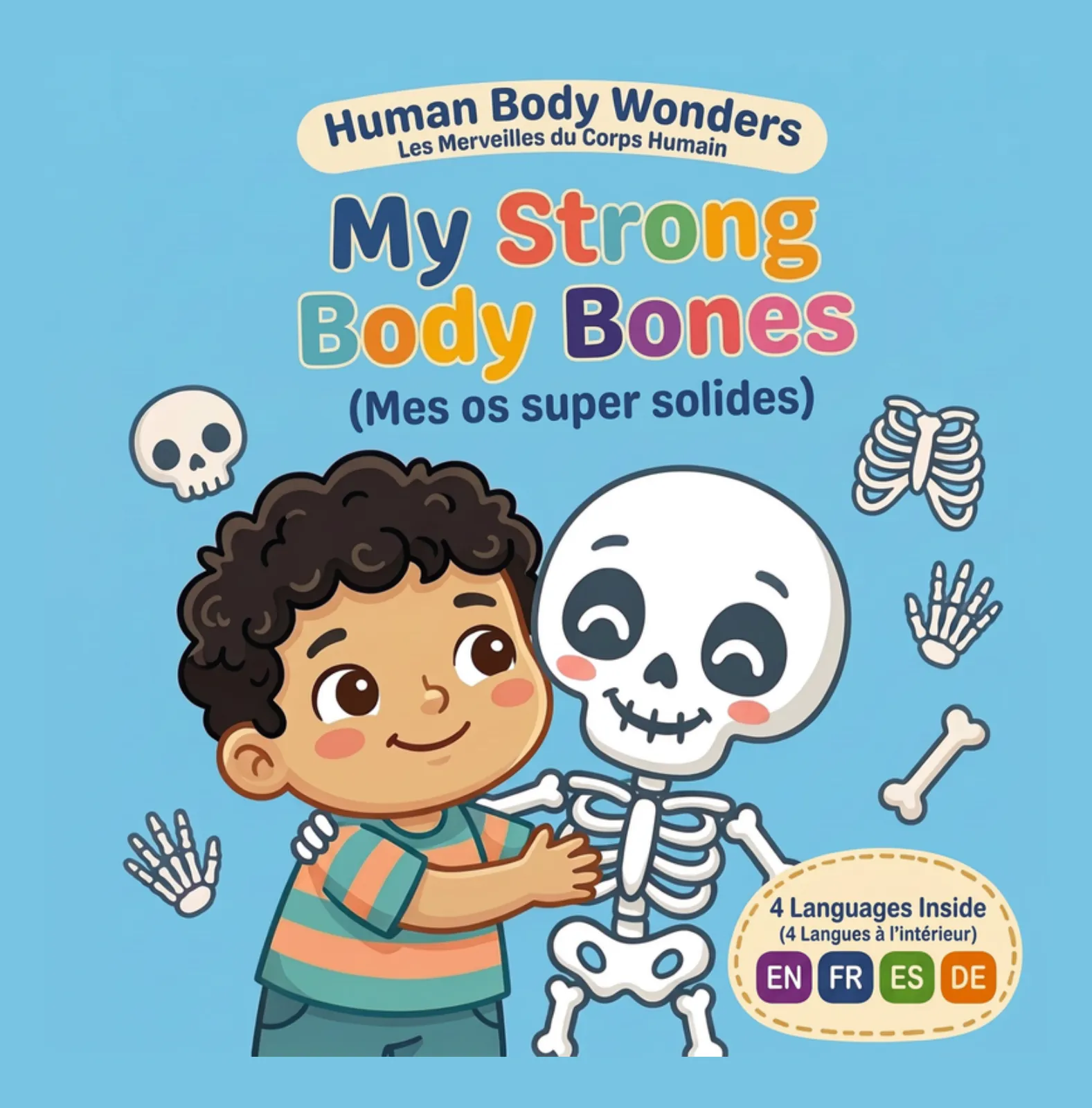
We created My Strong Body Bones in our Human Body Wonders series to help children discover how their bones work nonstop to help them stand, run and dance, while protecting their body. Like every book in the series, it is a 58-page square picture book written by a midwife for ages 3 to 7, with story pages and colouring pages, and every page in English, French, Spanish and German.
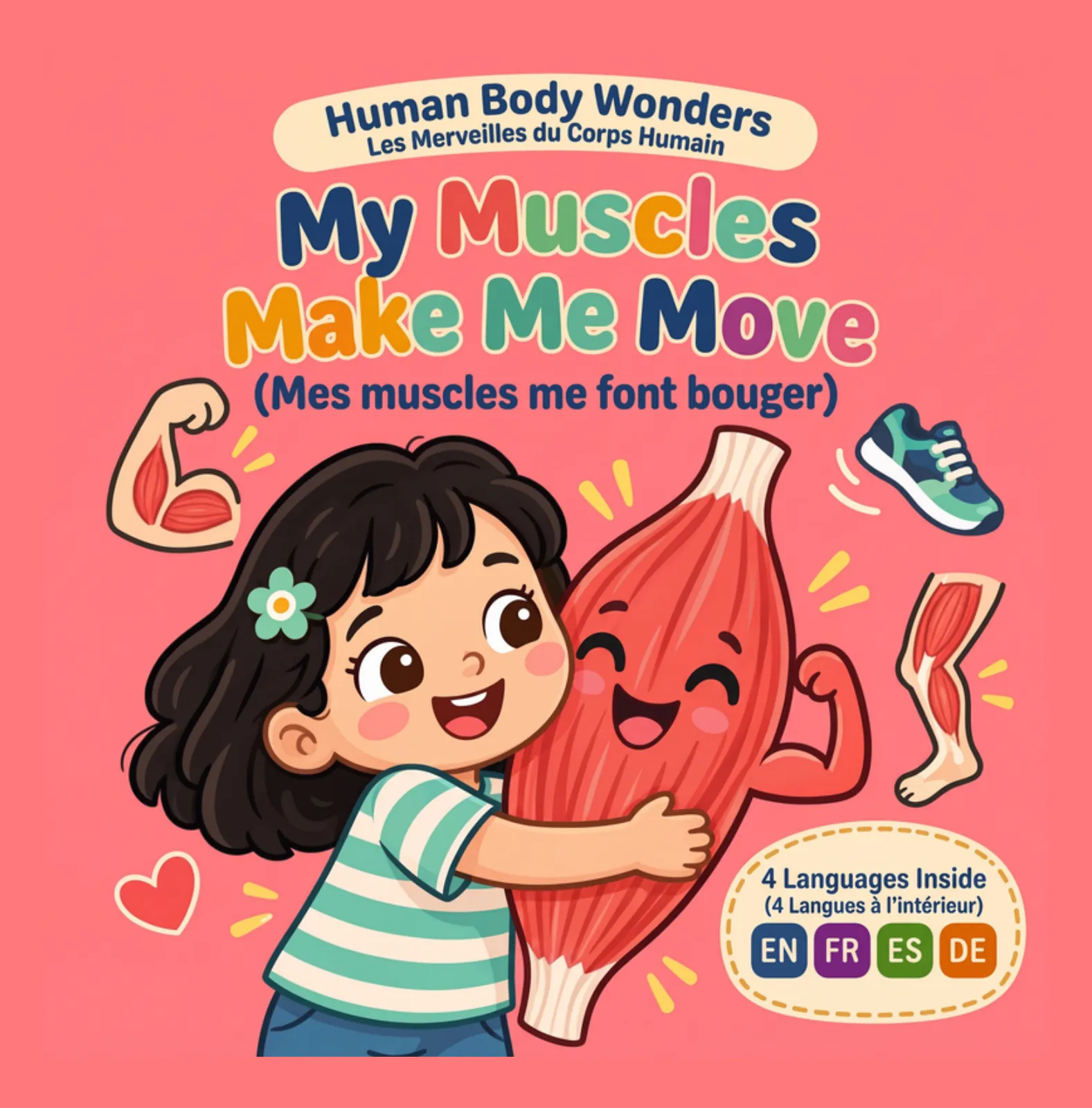
Bones and muscles work as a team, so My Muscles Make Me Move is a natural next read. You can find both, and the rest of our Human Body Wonders collection, on our books page.
A skeleton full of wonder
You do not need a plastic skeleton or a biology degree to teach children about bones. Their own body is the best model there is. A gentle press on the wrist, a wobbly walk with stiff knees, a chalk X-ray on the fridge: these little moments build real understanding, one bone at a time.