15 human body activities for preschoolers
Preschoolers are natural scientists, and the most fascinating laboratory they own is their own body. It moves, it breathes, it makes noises, it grows. The best part: you do not need special equipment to explore it. Everything below uses things you probably already have in a kitchen drawer or a toy box.
We have grouped our 15 favourite human body activities by theme, so you can pick one for a rainy afternoon or build a whole “body week”. Each one takes between five and twenty minutes.
Our five senses
1. The mystery sound game
Hide a few everyday sounds behind your back: keys jingling, paper crumpling, a spoon tapping a cup, water pouring. Ask your child to close their eyes and guess. Then swap roles. It is a lovely way to talk about ears and how they catch sounds all around us.
2. The texture detective bag
Put a few objects with different textures in a cloth bag or an old sock: a sponge, a smooth stone, a piece of fabric, a pine cone. Your child reaches in without looking and describes what they feel: soft, rough, bumpy, cold. Our skin tells us so much without our eyes.
3. Smell and guess
Prepare three or four small cups with familiar smells: an orange peel, a little cinnamon, a slice of banana, some coffee grounds. With eyes closed, can your child recognise them? Talk about how the nose helps us enjoy food and notice danger, like smoke.
Heart and lungs
4. Feel the heartbeat
Ask your child to place their hand flat on the left side of their chest and keep very still. Can they feel a gentle thump? Then jump twenty times together and feel it again. Faster! The heart works harder when we move, to send more blood around the body.
5. The homemade stethoscope
Roll a sheet of card into a tube, or use the cardboard tube from a kitchen roll. Put one end against your chest and let your child listen at the other end, gently, in a quiet room. Then swap. If you have a funnel and a short piece of hose, it works even better.
6. Balloon breathing
Breathing in and out slowly is a great calming exercise as well as a science lesson. Ask your child to put both hands on their tummy and breathe in, slowly, as if filling a balloon, then breathe out like a deflating balloon. Explain that the air goes into the lungs, which fill up and empty again, like two soft sponges.
7. The straw race
Give each player a straw and a small ball of paper or a cotton ball. Who can blow it across the table to the finish line? It shows that the air from our lungs is strong enough to move things. Keep straws for children old enough to use them safely.
Bones and muscles
8. The shadow skeleton
In a dim room, shine a torch on the wall and make shadows with your hands. Can your child feel the bones in their fingers? Count the knuckles together. Talk about how bones give our body its shape, and how without them we would be wobbly like jelly.
9. The bend test
Ask your child to try picking up a toy without bending their elbows, then without bending their knees. It is surprisingly hard and very funny. This is how we discover joints: the places where bones meet so we can bend and move.
10. The muscle squeeze
Ask your child to make a fist and squeeze, while their other hand rests on their forearm. They will feel the muscle tighten, then relax when they let go. Muscles work by pulling, and they get stronger when we use them. Try it with the leg, too, by standing on tiptoe.
11. The body outline
Lay your child down on a large sheet of paper, or a few sheets taped together, and trace around them. Then draw in what you know is inside: a heart, two lungs, a stomach, a brain, some bones. It does not need to be accurate; it is a conversation starter that can stay on the wall for weeks.
Food and growing
12. Digestion in a bag
Put a few crackers in a zip-top bag, add a little water and let your child squish it with their hands. This is a little like what the stomach does: it squeezes and mixes our food into a mush. Seal the bag well and keep it as a squishy experiment, not a snack.
13. The chewing challenge
At snack time, ask your child to notice what their teeth do. The front teeth bite, the back teeth grind. Try chewing a piece of apple slowly and talk about how chewing is the first step of digestion. It is also a chance to remind them why we brush our teeth.
14. The growing chart
Mark your child’s height on a strip of paper on the wall and add the date. Measure their hand and foot too, and trace them. Come back in a few months and compare. Children love seeing proof that their body is growing, even when they cannot feel it.
15. The body museum
At the end of your body week, invite your child to set up a “museum” of everything they made: the body outline, the drawings, the growing chart, the squished cracker bag. They can be the guide and explain each item to a grandparent or a teddy. Explaining something is one of the best ways to remember it.
Turning activities into a learning journey
These 15 activities work well on their own, but children often learn most when activities connect to each other. Pick one theme a week, read about it, try an experiment, then draw or colour what you discovered. We explain why colouring helps in why colouring helps children remember what they read.
Keep your explanations short and true. If your child asks a question you cannot answer, “Let’s find out together” is a perfect answer; our guide to the “why?” years has more ideas.
A ready-made science adventure
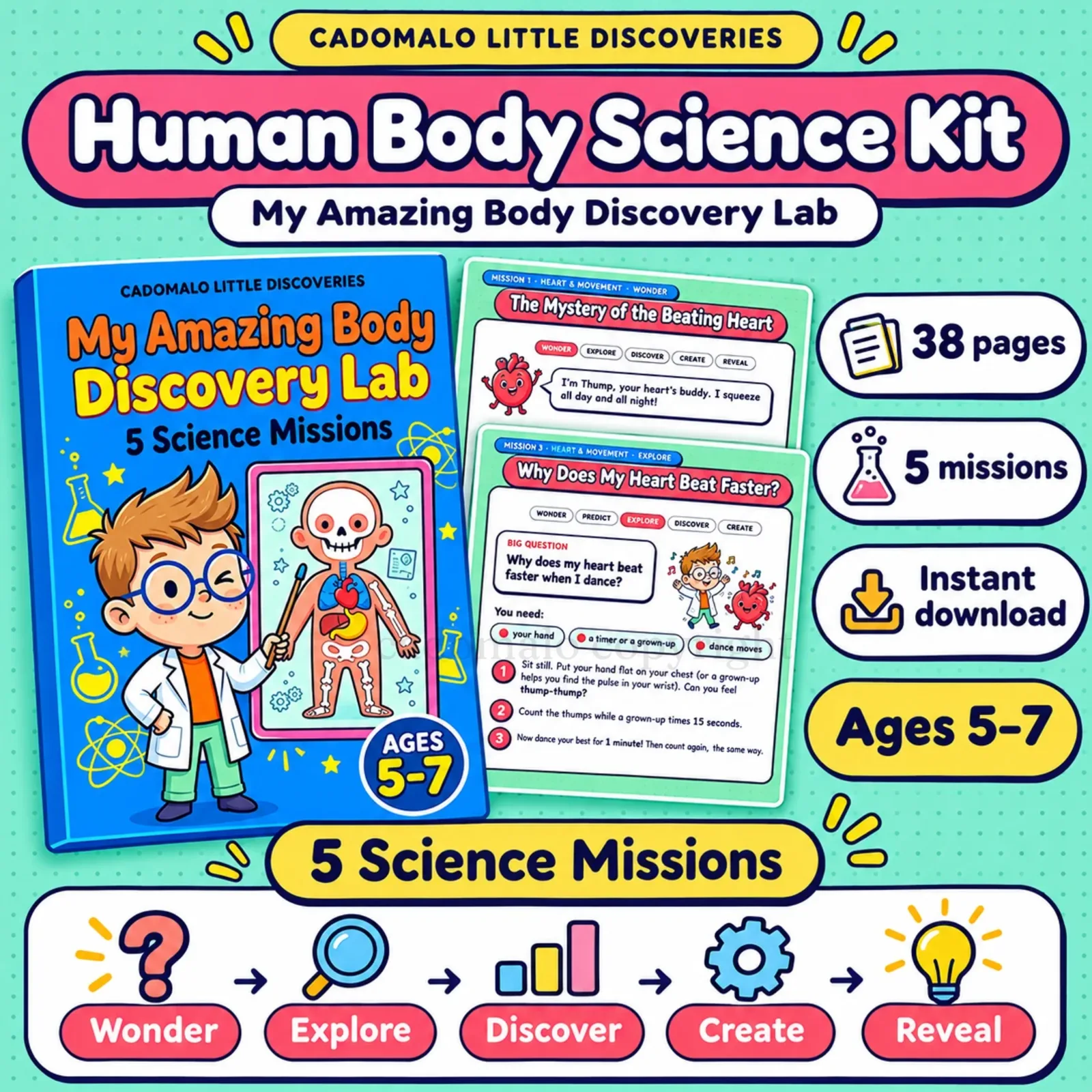
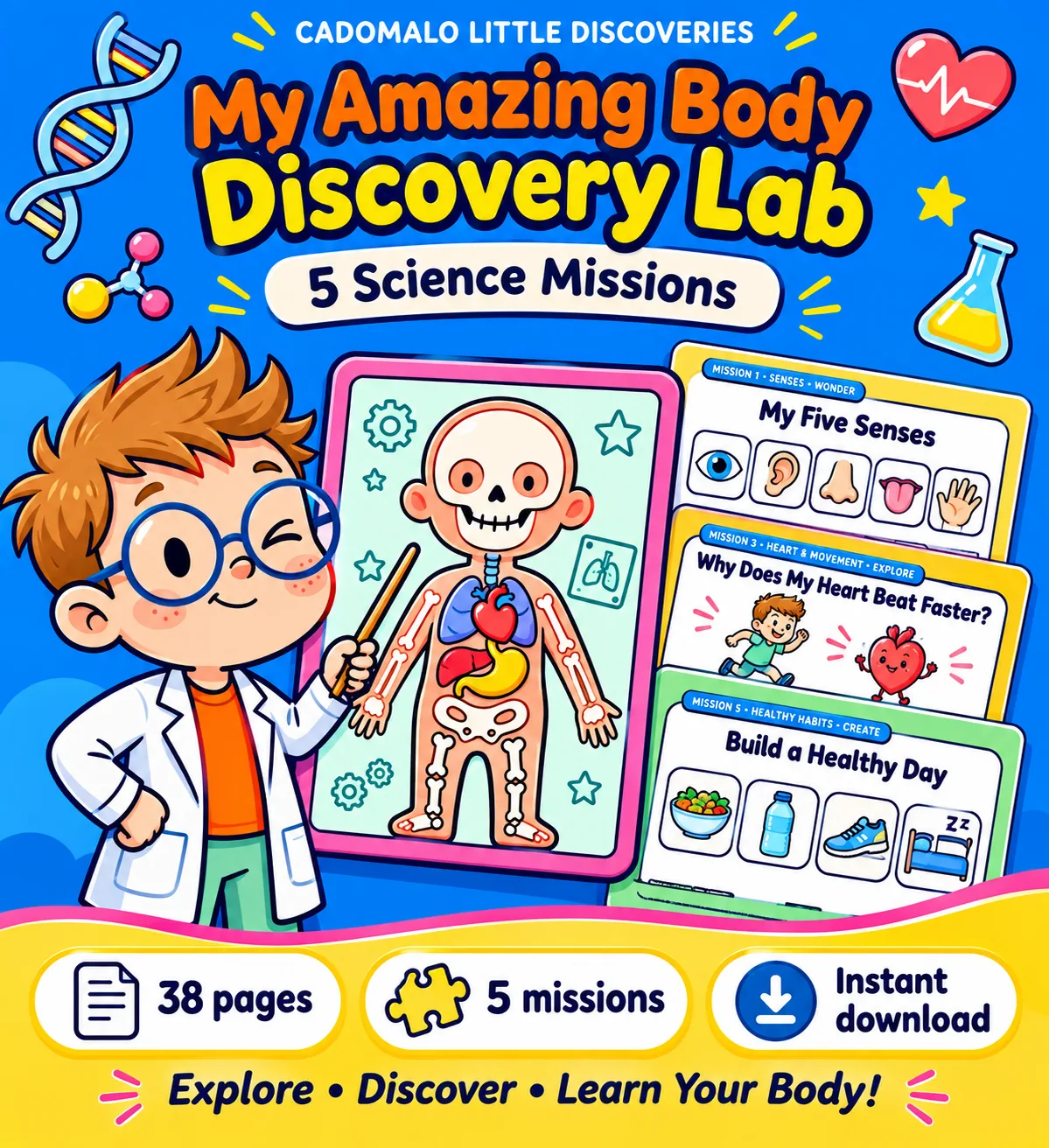
If you would like a ready-to-print version of these ideas, the My Amazing Body Discovery Lab brings five science missions together: senses, brain, heart and movement, bones and muscles, and the food journey. Children join Pico the little scientist and his buddies for real experiments with everyday things, collect badges in a discovery passport and finish with a Junior Body Scientist certificate. It is made for ages 5 to 7, and the facts were checked against children’s health sources (KidsHealth by Nemours and Frontiers for Young Minds).
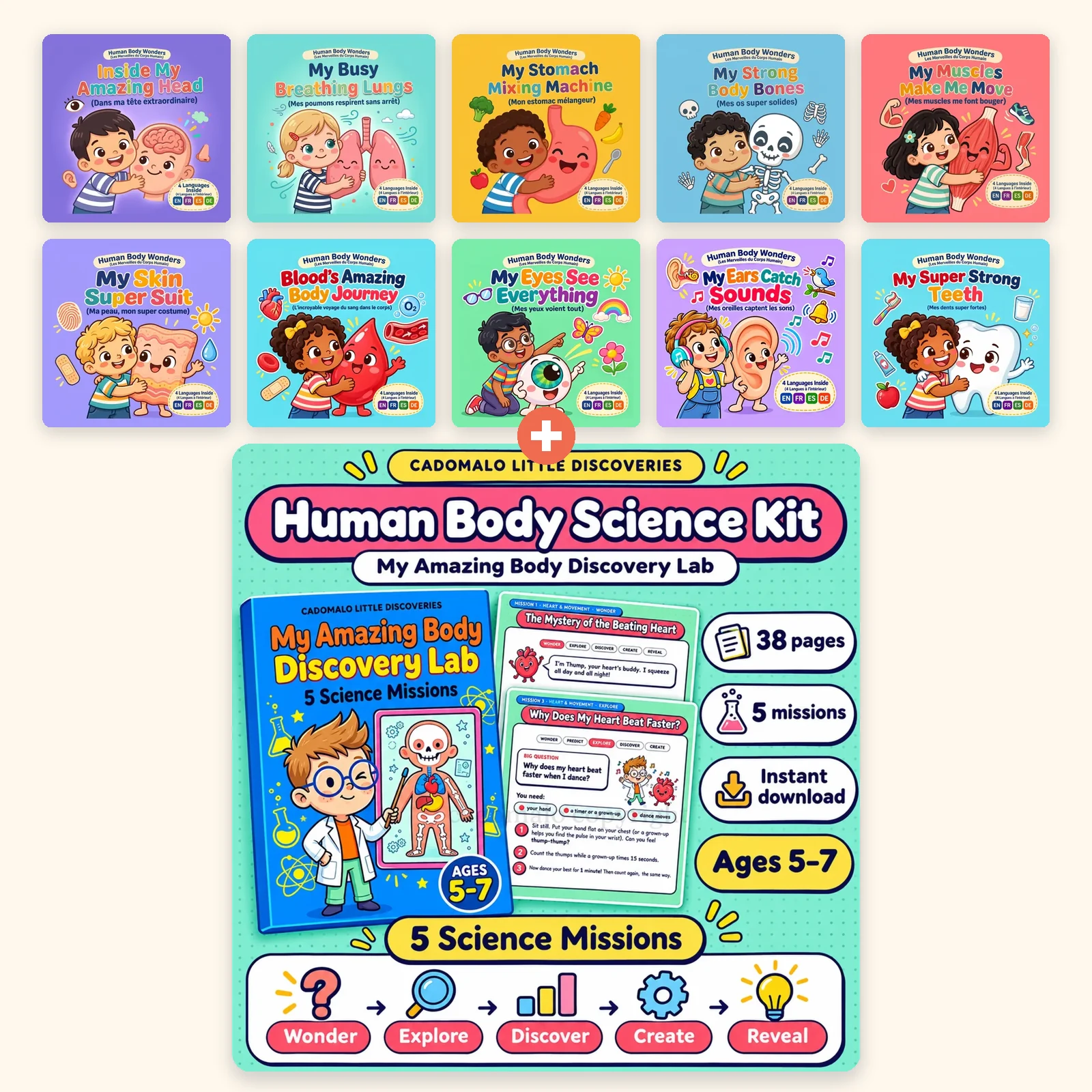
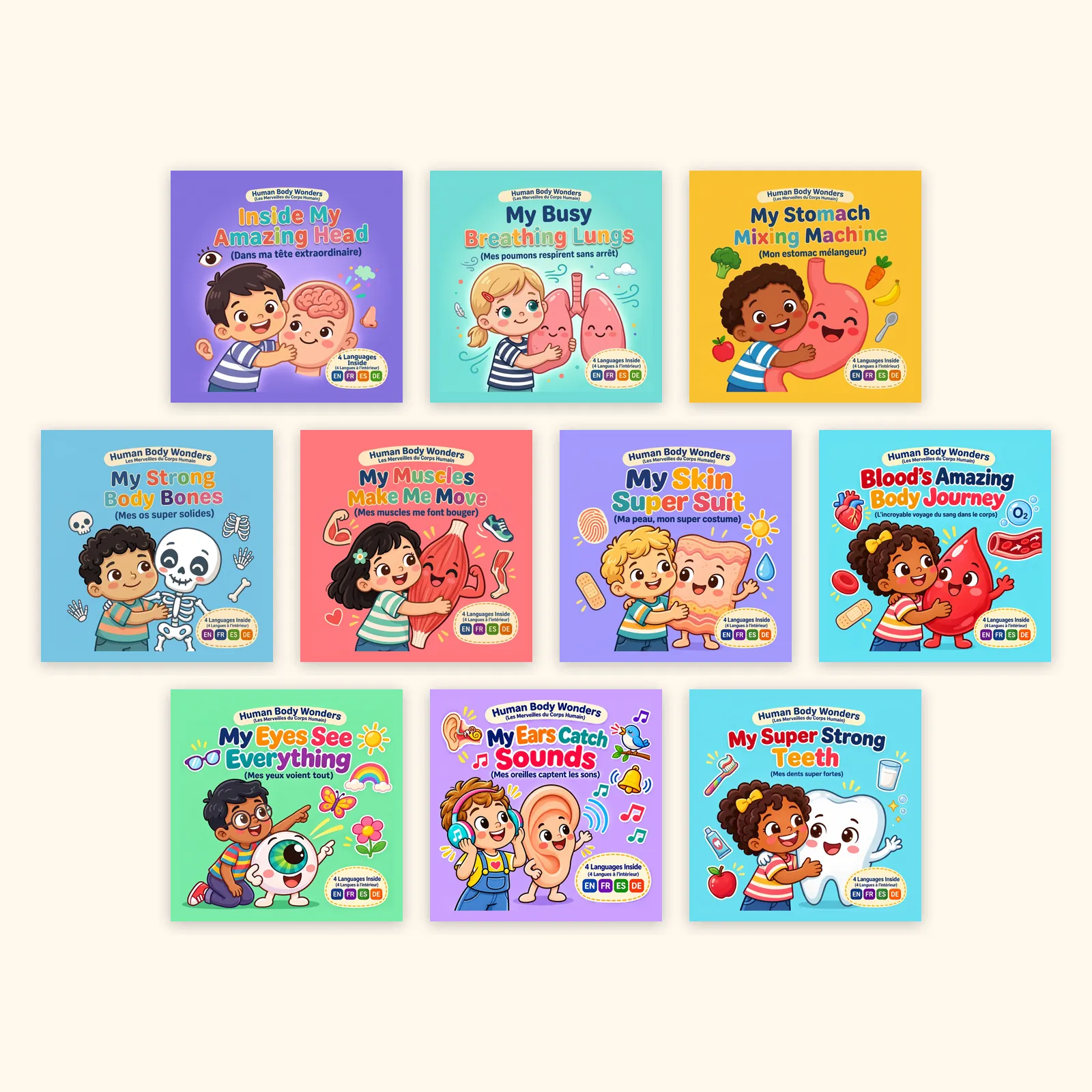
For children who want to go further, our new Ultimate Human Body Learning Pack pairs the Discovery Lab with all ten Human Body Wonders picture books, from the head and lungs to the bones, skin and teeth. The books are 58-page square picture books for ages 3–7, in English, French, Spanish and German, with colouring pages in every book. If you only want the books, the Human Body Wonders bundle has all ten.
Browse all our science kits on the discovery kits page.
In short
Exploring the human body with preschoolers does not take a lab coat, only curiosity and a few household objects. Listen to a heartbeat, trace a body outline, squish a cracker bag. Each small experiment gives your child new words, new questions and the wonderful feeling that their own body is worth discovering.