How to explain digestion to a 4-year-old
Sooner or later, every preschooler asks it. Maybe at dinner, maybe on the toilet, maybe in the middle of the supermarket: "Where does my food go?" It is a wonderful question. It means your child has noticed that food goes in, and something else comes out, and they want to know what happens in between.
At four, children do not need every organ and every scientific word. They need a clear, true story they can follow, with a beginning, a middle and an end. Here is how we like to tell it.
Tell it as a journey
Young children understand stories much better than lists of facts. So instead of naming organs one by one, describe digestion as a journey that a piece of food takes through the body. You can even give the food a name. Let us follow a little piece of apple called Pip.
Stop 1: the mouth
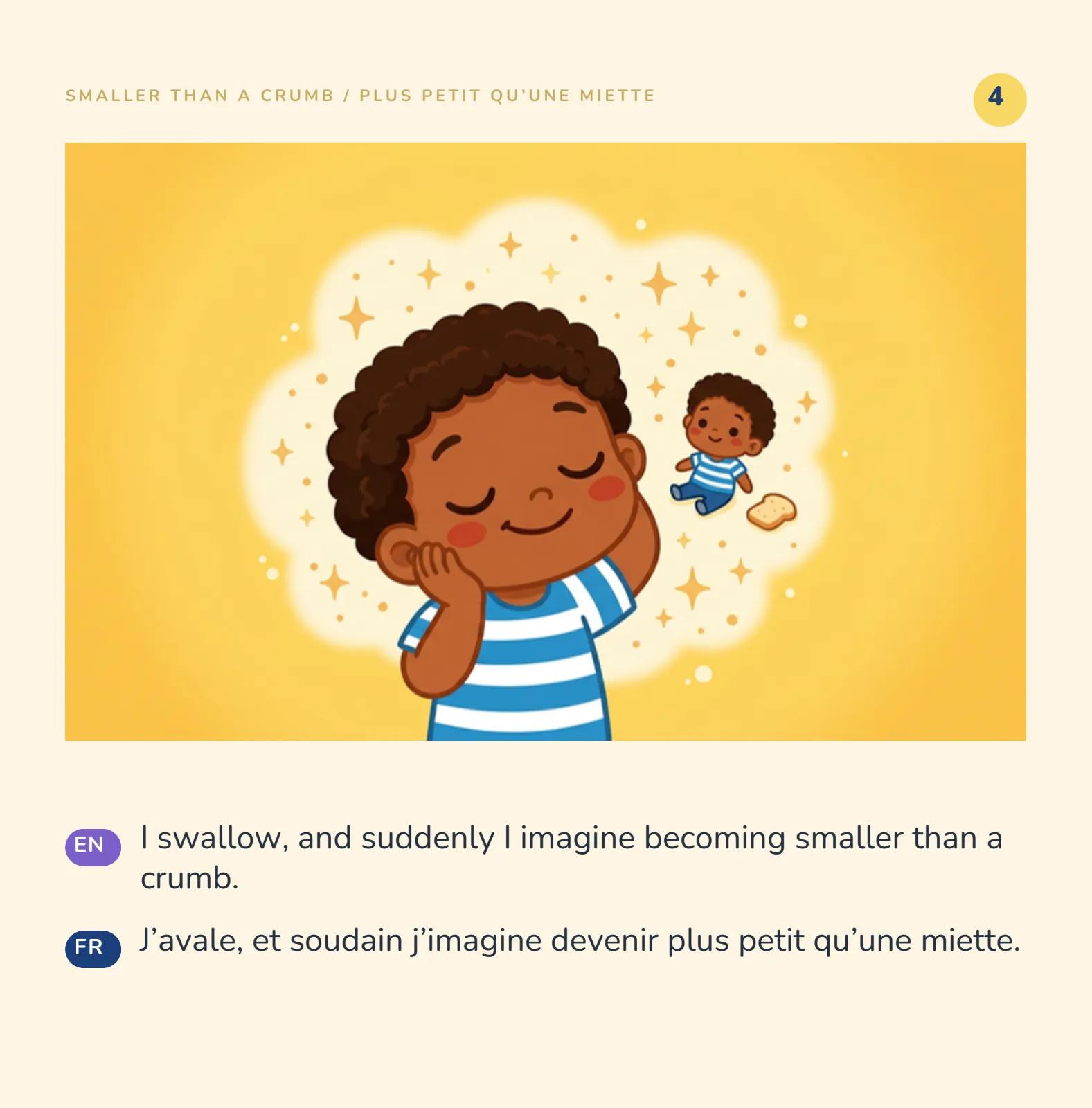
"Pip’s journey starts in your mouth. Your teeth chop and crunch the apple into tiny pieces. Your mouth makes spit, called saliva, which makes the food soft and wet so it is easy to swallow. Your tongue pushes it to the back of your mouth, and then… gulp!"
Ask your child to take a bite of something crunchy and notice what their teeth and tongue are doing. This is a perfect moment to talk about chewing well and taking small bites.
Stop 2: the food pipe
"When you swallow, Pip slides down a long, stretchy tube called the food pipe. Grown-up doctors call it the oesophagus. The walls of the tube squeeze to push the food down, a little like squeezing toothpaste out of a tube. It even works if you are lying down!"
Children love this detail: the food does not just fall down; the body pushes it.
Stop 3: the stomach
"At the bottom of the food pipe is your stomach, a stretchy bag inside your tummy. It is like a mixing machine. It squeezes and churns the food and mixes it with special juices, until Pip is not a piece of apple any more but a soft, mushy soup."
Point to where the stomach is: a little to the left, under the ribs, higher than many children expect. If your child ever hears their tummy rumble, you can explain that this is often the sound of the stomach and intestines moving and squeezing.
Stop 4: the small intestine
"Next, the soup goes into a long, curly tube called the small intestine. It is very long, much longer than you are tall, but it is folded up neatly inside your tummy. Here the body takes out all the good things from the food, the bits that give you energy and help you grow, and passes them into your blood. Your blood carries them all around your body, to your muscles, your bones and your brain."
This is the heart of the story, and the answer to "why do we eat?" Food is fuel and building material for the body.
Stop 5: the large intestine
"What is left over goes into a wider tube called the large intestine. Here the body takes back water it still needs. Slowly, what is left becomes poo."
Stop 6: the toilet
"And when your body is ready, the poo comes out when you go to the toilet. Pip’s journey is finished!"
Yes, children will giggle. That is fine. Poo is a natural part of the story, and talking about it calmly helps children understand that their body is doing its job.
Words that work for preschoolers
You can mix simple words with the real names. Children enjoy learning "grown-up" words when they come with a picture they understand.
- Saliva: the spit that makes food soft.
- Food pipe (oesophagus): the tube from your mouth to your stomach.
- Stomach: the mixing machine.
- Small intestine: the long curly tube that takes the good stuff from food.
- Large intestine: the wider tube that takes back water.
- Digestion: the whole journey, from bite to toilet.
Our article on talking to young children about their body explains why real words, given with simple pictures, help children so much.
Hands-on activities to try at home
Four-year-olds learn by doing. These simple activities turn the story into something they can see and touch.
Digestion in a bag
Put a few crackers or a piece of bread into a zip-top bag with a little water. Seal it well, and let your child squish and squeeze it. Talk about how the stomach squeezes and mixes food in a similar way. Watching the cracker turn into mush makes the idea stick. (Always supervise, and make sure the bag stays closed.)
The stocking squeeze
Push a soft ball into an old pair of tights or a long sock, and show your child how squeezing behind the ball moves it along. This is how the food pipe and intestines push food through the body.
Draw the journey
On a big sheet of paper, trace around your child as they lie down. Then draw the path of the food together: mouth, food pipe, stomach, a long curly line for the small intestine, a wider tube around it for the large intestine. Colouring the parts helps children remember them; we explain why in our post on colouring and memory.
Listen to the tummy
After a meal, let your child gently put an ear to your tummy (or use a cardboard tube as a "stethoscope"). Sometimes you can hear gurgles and rumbles from the digestive system at work.
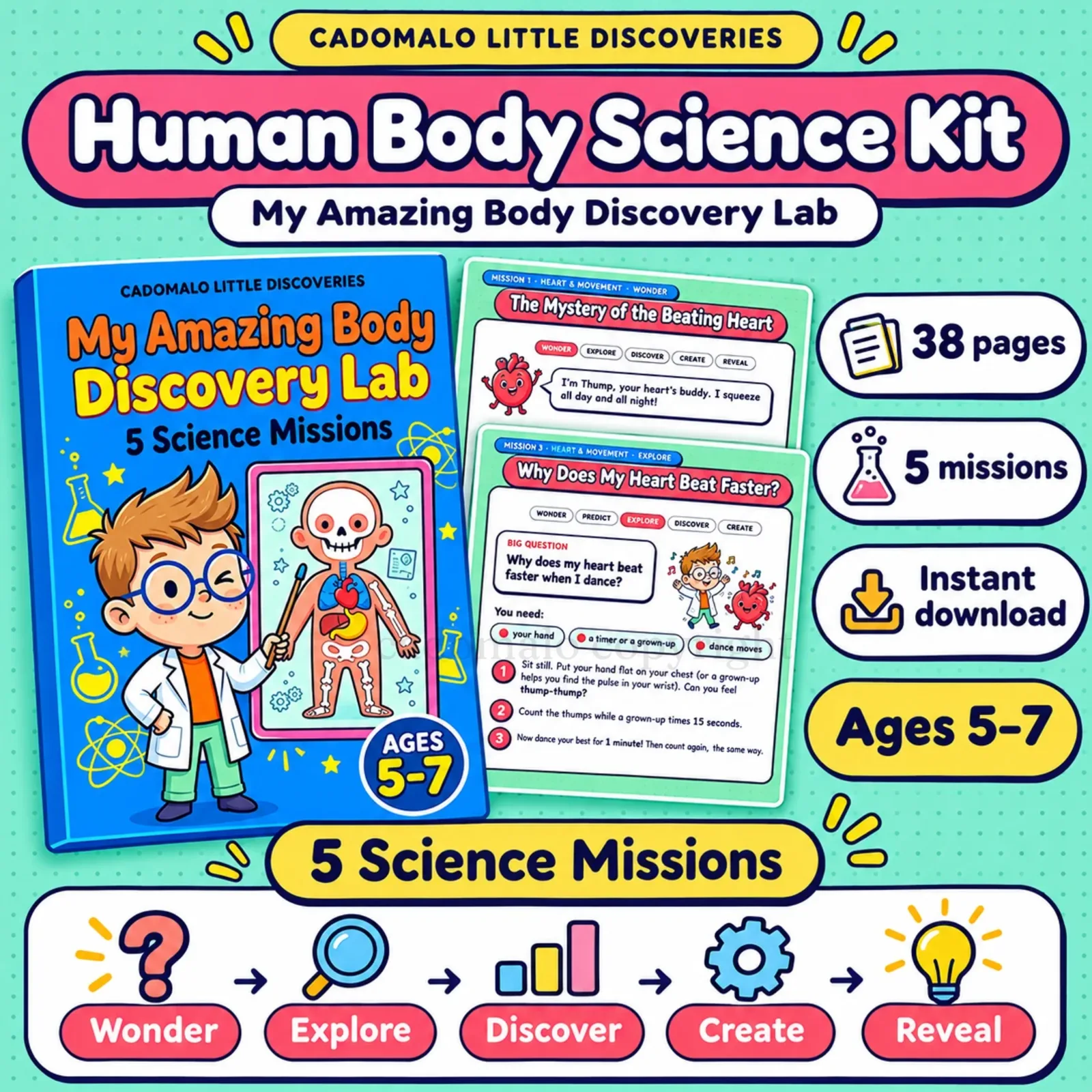
If your child loves experiments like these, our printable My Amazing Body Discovery Lab includes a whole Food Journey mission, with digestion in a bag, a food maze and a fold-out book, as one of five hands-on science missions made with everyday materials. The pages are in English and it is designed for ages 5 to 7, so younger children enjoy it most with a grown-up reading aloud. You can see it, and our other kits, on our discovery kits page.
Answering the follow-up questions
Once the story clicks, more questions often follow. A few short, true answers:
- "Why do I get hungry?" Your body uses energy all day, and hunger is its way of telling you it needs more fuel.
- "Why do I need to drink water?" Your body needs water for almost everything it does, including helping food move along.
- "Why does poo smell?" Tiny living things in your intestines help break down leftovers, and that makes the smell. It is normal.
- "What happens if I swallow chewing gum?" You can say that gum is not food, it is made for chewing and not for swallowing, so we spit it out in the bin.
Read the story together
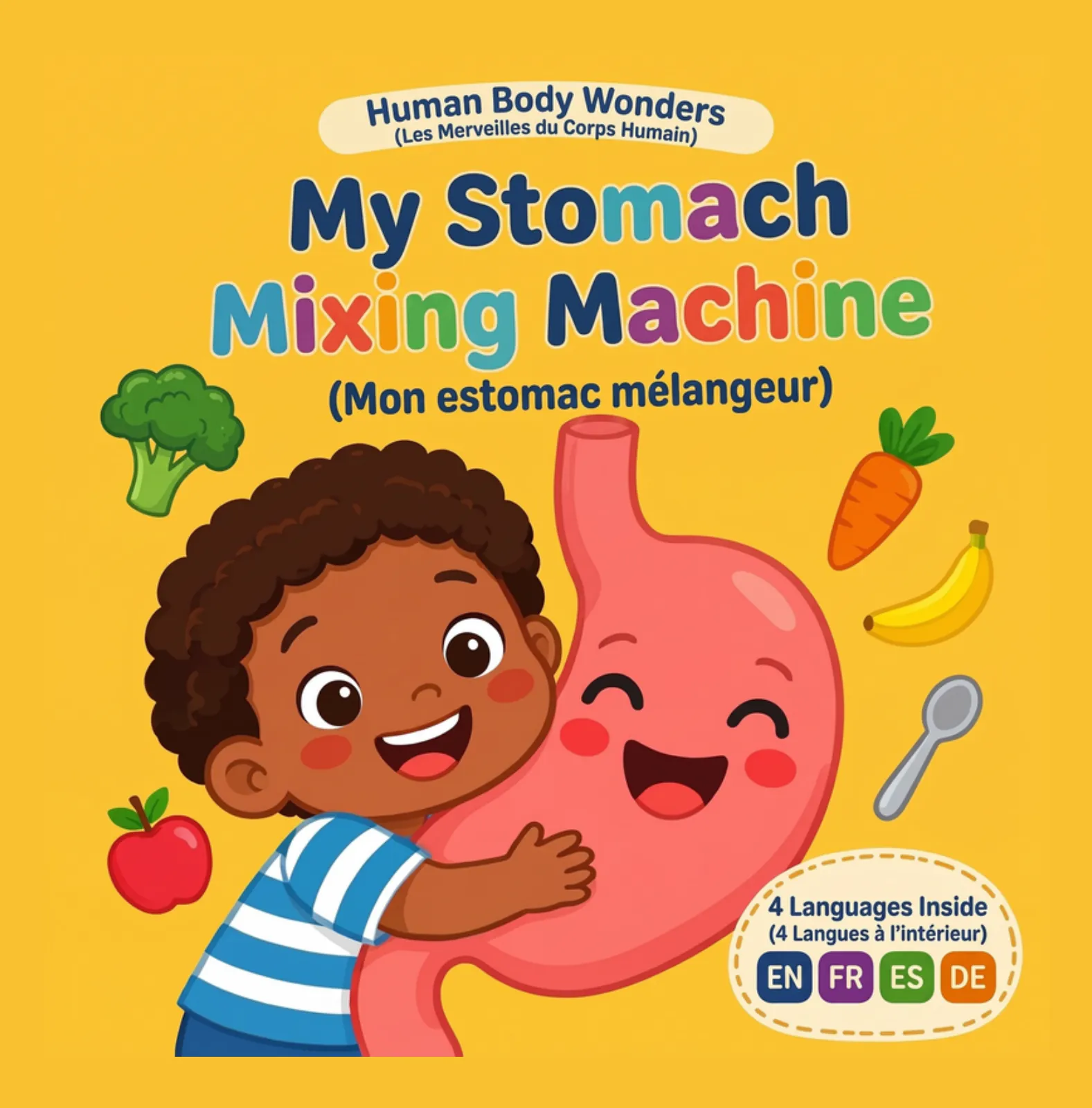
We wrote My Stomach Mixing Machine in our Human Body Wonders series to help children discover how their stomach works nonstop to help them digest, grow and stay healthy. It is a 58-page square picture book written by a midwife for ages 3 to 7, with story pages and colouring pages, and every page in English, French, Spanish and German, so you can read it in your home language and let the others become a game.
One bite at a time
You do not have to explain everything in one go. Tell the journey once, then come back to it at mealtimes: "Where do you think your pasta is now?" Little by little, your child builds a picture of their body that is simple, true and full of wonder. And the next time they ask where their food goes, they might just tell you the answer themselves.